

Erectile Dysfunction
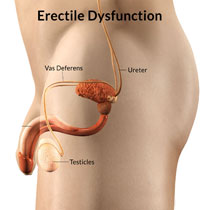
What is erectile dysfunction?
Erectile dysfunction (ED) means that you cannot get and/or maintain an erection. In some cases the penis becomes partly erect but not hard enough to have sex properly. In some cases, there is no swelling or fullness of the penis at all. ED is sometimes called impotence.
How common is erectile dysfunction?
Most men have occasional times when they cannot get an erection. For example, you may not get an erection so easily if you are tired, stressed, distracted, or have drunk too much alcohol. For most men it is only temporary, and an erection occurs most times when you are sexually aroused. However, some men have persistent, or recurring, ED. It can occur at any age, but becomes more common with increasing age. About half of men between the ages of 40 and 70 have ED. About 7 in 10 men aged 70 and above have ED.
What causes erectile dysfunction?
There are several causes which tend to be grouped into those that are mainly physical and those that are mainly due to mental health (psychological).
Physical causes
About 8 in 10 cases of ED are due to a physical cause. Causes include:
- Reduced blood flow to the penis. This is, by far, the most common cause of ED in men over the age of 40. Like in other parts of the body, the arteries which take blood to the penis can become narrowed. The blood flow may then not be enough to cause an erection. Risk factors can increase your chance of narrowing of the arteries. These include getting older; high blood pressure; high cholesterol; smoking.
- Diseases which affect the nerves going to the penis. For example, multiple sclerosis, a stroke, Parkinson's disease, etc.
- Diabetes. This is one of the most common causes of ED. Diabetes can affect blood vessels and nerves.
- Hormonal causes. For example, a lack of a hormone called testosterone which is made in the testes. This is uncommon. However, one cause of a lack of testosterone that is worth highlighting is a previous head injury. A head injury can sometimes affect the function of the pituitary gland in the brain. The pituitary gland makes a hormone that stimulates the testis to make testosterone. So, although it may not at first seem connected, a previous head injury can in fact lead to ED. Other symptoms of a low testosterone level include a reduced sex drive (libido) and changes in mood.
- Injury to the nerves going to the penis. For example, spinal injury, following surgery to nearby structures, fractured pelvis, radiotherapy to the genital area, etc.
- Side-effect of certain medicines. The most common are some antidepressants; beta-blockers such as propranolol, atenolol, etc; some 'water tablets' (diuretics); cimetidine. Many other less commonly used tablets sometimes cause ED.
- Alcohol and drug abuse.
- Cycling.
- ED after long-distance cycling is thought to be common. It is probably due to pressure on the nerves going to the penis, from sitting on the saddle for long periods. This may affect the function of the nerve after the ride.
- Excessive outflow of blood from the penis through the veins (venous leak). This is rare but can be caused by various conditions of the penis.
Mental heath (psychological) causes
Various mental health conditions may cause you to develop ED. They include:
- Stress - for example, due to a difficult work or home situation.
- Anxiety.
- Relationship difficulties.
- Depression.
What should I do if I develop persistent erectile dysfunction?
It is best to see your GP. He or she is likely to discuss the problem, go over any medication you may be taking, and do a physical examination. This can help to identify or rule out possible underlying causes. Before treatment, your GP may suggest some tests.
What tests may be done?
Depending on your symptoms, likely cause of the ED, age, etc, your doctor may suggest that you have some tests. These are mainly to check up on any risk factors listed above which increase the risk of developing narrowing of the arteries.